
Picture the scene.
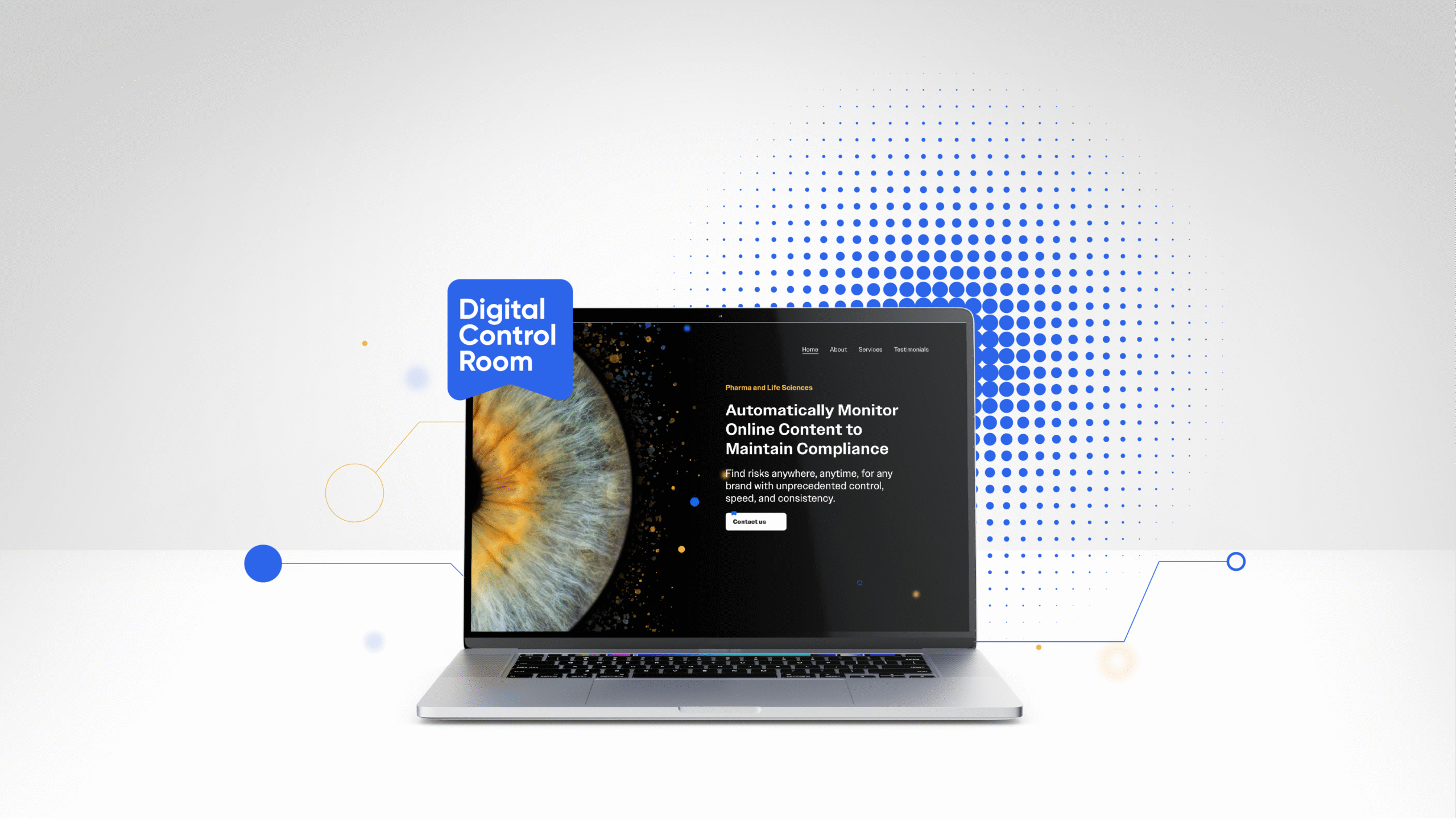
You’re a high-tech business that helps tightly-regulated industries like pharmaceuticals keep their online materials accurate and compliant. And with a live industry event coming up, clients-in-waiting will be visiting your website. Problem is, your current website isn’t quite up to scratch – and you’ve a month to get your new site designed, built and tested. This is precisely the scenario Digital Control Room came to us with. Could we help?
Let’s hand over to Anna, our Creative Director.
Okay, first things first. What was the brief?
Digital Control Room felt their site needed a rework – something to better represent their incredible tech and showcase their evolution. See, their visual identity didn’t quite reflect what they did and this disconnect gave their audience mixed messages.
What kind of a disconnect?
For one, the site featured lots of people. Normally we love this, it humanises the brand, but Digital Control Room’s product is automatic. Showing too many people might give the impression of a consultancy.
Where do you start with a redesign project like this?
We won’t often get a ‘complete’ brief right off the bat. We’ll sit down with the client and figure out exactly what they want. It might be the first time the client’s properly thought about their brand identity and, see, it’s far more than just logos and colour preferences. It’s who you are, what you do, what you stand for.
Digital Control Room were very clear. Although a tech company, they didn’t want the design to be too IT-based – so no shots of computers, motherboards or circuitry. They also wanted to keep their existing logo, a ‘bookmark’, but refresh it.
Where do you go from those discussions?
Into research. Knowing that DCR wanted minimal, clean and simple design, one of our designers, Lauren, pulled together a research pack. This included competitor research, audience expectations, current design trends and other ideas.
We also looked deeper into what the client does to better understand the scale of their work. It’s mind boggling – corporate clients managing tens of thousands of domains, all needing to stay compliant.
We also pull in non-designers to the discussions: strategists, account managers, copywriters … anyone else who can bring a different ( often incredibly valuable ) perspective.
What happens after the research stage?
The research informs our concepts. Confident in our understanding of their brief and our research, we jumped into the design phase, creating detailed mock-ups for their review. This is probably my favourite part of the process, it’s like putting flowers into the vase.
What was your overarching idea?
We started from the perspective of fractals and mathematical sequences. These provided the clean, simple design they liked, which touched on data without feeling too ‘IT’.
It also tied into what they do. Pattern recognition is a big part of their job, especially looking for anomalies in the form of outdated content and incorrect claims.
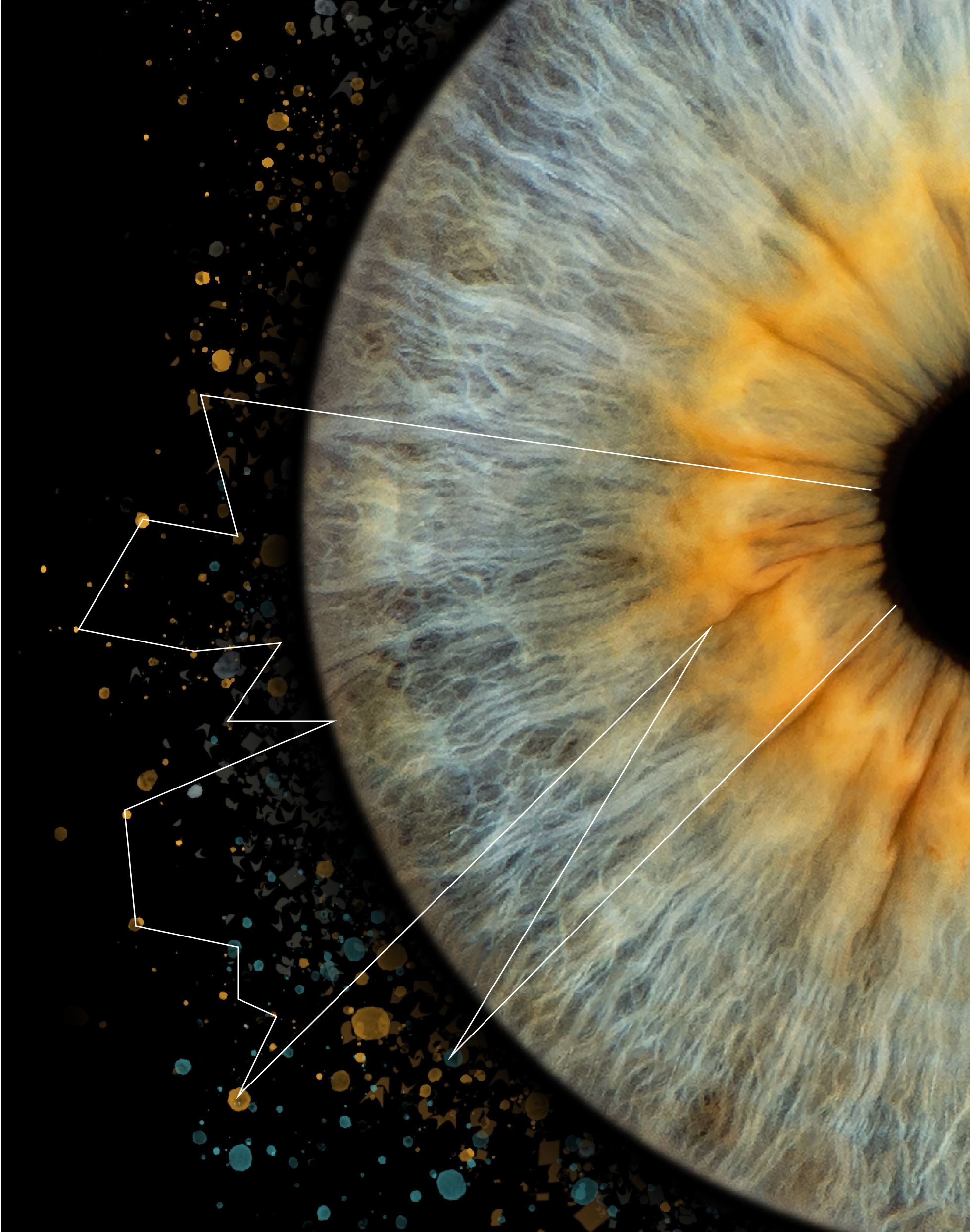
Then we added the eye. This works with the fractals too and reflects them ‘seeing everywhere’, looking out for their clients, analysing everything. We used an actual eye and a digitised version.
Although specifically a website redesign, rather than a company-wide rebrand, we put together a ‘light’ style guide – really helpful in the design process.
This serves as a single document of ‘truth’ to maintain coherency, and make sure all design elements work in harmony. Meaning the brand doesn’t just look good on a website, but could be expanded across social media, presentation decks, brochures, event stands … anywhere it’s needed.
How was the feedback?
Digital Control Room was very happy with the concepts, so we worked on the designs in more detail.
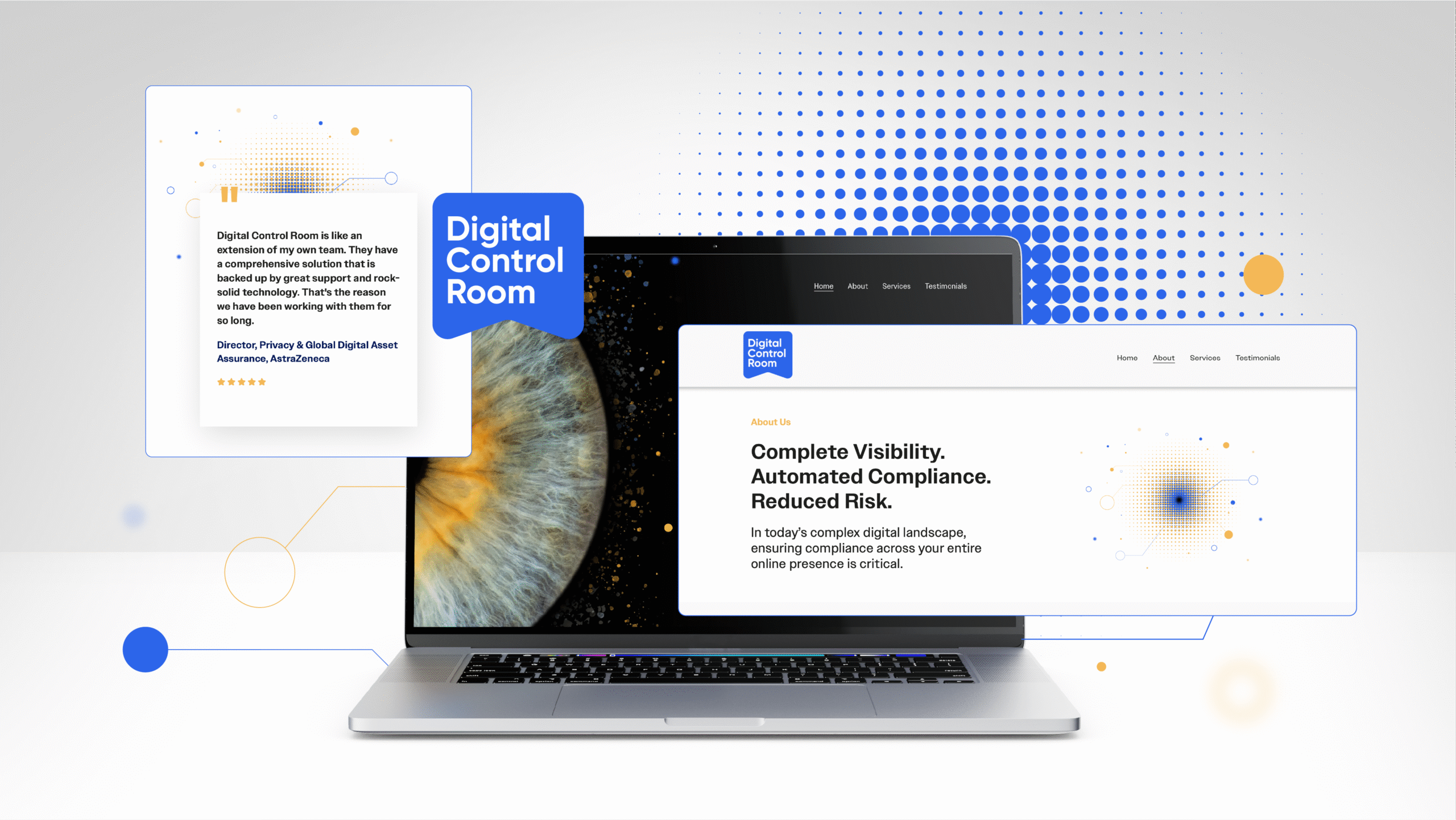
With the design approved, we built a responsive staging site – somewhere they could see the design in action. They supplied all the copy, and without complex functionality or backend elements, we could work faster to meet the tight deadline. Plus, their background as back-end tech experts helped us explain tech decisions easily and quickly.

Once it’s built, do you handover the keys, so to speak?
We always give clients full logins to their site, assuming they’re comfortable with it. This allows them control (it’s their site, after all) and avoids us becoming a bottle-neck.
For Digital Control Room, we also offered a mini tutorial so they could be independent with simple edits, copy changes etc. while highlighting we’re happy to help with bigger challenges or upgrades.
So, the big question … How did you do in terms of the timeline?
We were careful not to overpromise. The Digital Control Room team were very realistic, saying they’d be happy with a simple homepage that contained all the vital information ready for the event, with other pages to follow.
But thanks to some incredible hard work from the team, and seamless collaboration with Digital Control Room, we delivered the whole thing on time.
”“We’d seen SBC’s work before, including some excellent UI re-design work for one of our applications, so when it came to refreshing our website, it was an easy decision to bring them in. They were great to work with: clear process, on time, on budget, and they delivered a site we’re proud of. Since then, we’ve partnered with them again on an important project for one of our global pharma clients, and even introduced them directly. They now work with that client independently, which works really well for us. A safe pair of hands we’re happy to recommend.”
- Steve Hickey,Founder, DCR

What would you say to other SMEs thinking about a redesign?
Sometimes it’s easier than you think.
Having a good digital presence is vital and it’s one of the first things that people – customers, partners, investors – see. But it needn’t be complicated and it might make sense to do bits at a time. Start with a new website. Update the branding on your socials. Get new presentation slides …
So it’s OK to make small improvements rather than a company-wide rebrand?
We often say “perfection is a unicorn” – so don’t chase it. Focus on moving forward, incrementally. Besides, comms moves fast these days. Spend two years getting everything in line, then the day you launch it, it might be out of date.
My advice? If timeframes, scope, or budget are stopping you from refreshing your brand, start small.